
Arizona Ranch Land for Sale: The Next Frontier in Off-Grid Investment
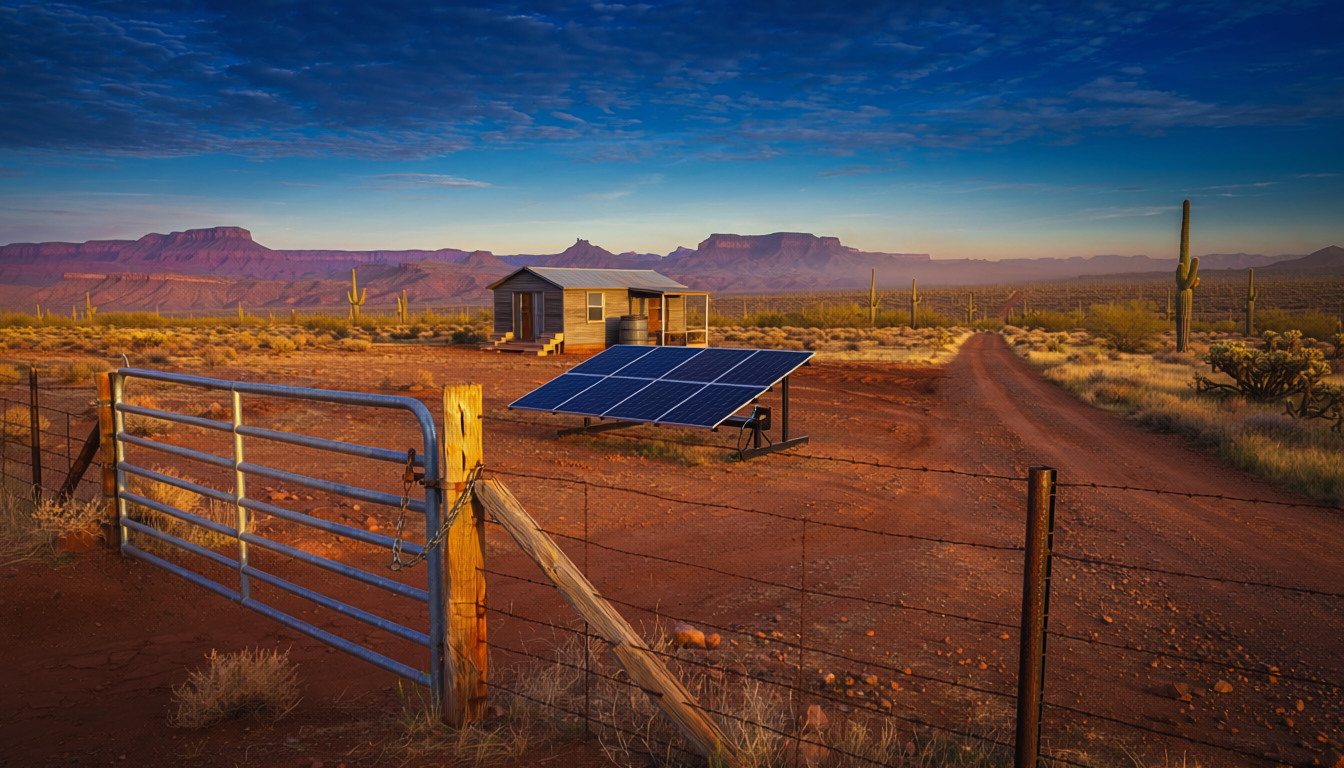
Explore Arizona Land Off-Grid
Looking for Available Acreage in Arizona?
Browse our current selection of off-grid land parcels or get in touch with our team directly to discuss what you're looking for.
Buyer preferences have shifted. Fewer people want a quarter-acre lot squeezed between two fences, and more are underwriting space, privacy, and unobstructed sky as part of the value proposition. That shift is exactly why Arizona ranch land for sale across Coconino and Yavapai counties has seen sustained buyer interest.
We've watched demand build steadily in this market, and the fundamentals explain why. Arizona's high desert offers something a lot of denser, more regulated states simply can't supply: usable, affordable acreage with genuine room to expand.
Why Buyers Are Looking North
Northern Arizona occupies a genuine sweet spot in this market. It's remote enough to deliver real privacy, yet close enough to towns like Williams and Ash Fork that supply runs don't turn into a full-day logistics problem.
Elevation is a meaningful differentiator here too. At five to six thousand feet, summer temperatures stay well below the desert-floor extremes most buyers associate with Arizona. Juniper and piñon cover the landscape rather than cactus and open sand — a distinct terrain profile from the low-desert parcels many out-of-state buyers picture by default.
Buyers frequently describe this region as the missing middle ground in the rural land market — not the harsh remoteness of true backcountry, and not the density of a platted subdivision.
What Differentiates This Inventory
A few characteristics separate this market from typical rural listings elsewhere:
- Maintained road access across most parcels, sufficient for a standard truck without specialized equipment
- Checkerboarded state trust land, giving many parcels effective proximity to open, undeveloped acreage beyond their own boundary lines
- Low annual carrying costs — property taxes often run a few hundred dollars for a full 40-acre parcel
- Surface water rights on select ranches, supporting year-round wildlife activity and recreational value
None of these factors show up in a standard listing photo, but they materially affect both usability and long-term resale value once a buyer actually closes.
What "Off-Grid" Means for This Property Type
Purchasing off-grid property in Arizona is a fundamentally different transaction than buying a home in a platted subdivision. There's no municipal water line at the curb and no utility company handling hookups automatically. That's not a deficiency in the offering — for the buyer pool this market attracts, it's the core value proposition.
Off-grid ownership in this region typically involves:
- Solar power systems, usually paired with a backup generator for extended cloud cover
- Water hauling or delivery, since many parcels sit above a deep water table
- Septic or alternative waste systems, approved through standard county permitting
- Satellite internet service, which has meaningfully expanded connectivity in areas that were previously considered unconnectable
That last point is underweighted in most market discussions. A decade ago, purchasing remote acreage effectively meant forgoing connectivity. That's no longer the case, and it has opened this market to a different buyer profile — one underwriting reliable internet access alongside privacy, not trading one for the other.
Wildlife and Recreational Value
This market isn't purely a privacy play — it carries genuine recreational amenity value. Deer, elk, and antelope move through the region year-round, drawn by stock tanks and natural water sources across the ranch acreage. For hunting-focused buyers, that consistency is a more relevant underwriting factor than raw acreage alone.
Even buyers without hunting intent tend to weight this amenity value in their purchase decision — it's a differentiator no platted residential lot can offer.
Seasonal Factors That Affect the Property
This region doesn't behave like the postcard version of Arizona — elevation changes the entire seasonal profile. Spring brings mild days and cool nights. Summer stays comfortable relative to the valley floor, rarely reaching the extremes associated with Phoenix. Winter can bring occasional snow, particularly at higher elevations near Mount Floyd.
This seasonal variation is a genuine draw for buyers who want four distinct seasons without leaving the state, but it also affects planning — water needs, solar output, and road conditions all shift meaningfully across the calendar year, and should be underwritten accordingly.
Shared Infrastructure and Community Access
Owning remote acreage doesn't mean isolation from a practical standpoint. Many parcel owners across these ranches are connected through shared road associations and local co-ops that maintain access routes — infrastructure that functions similarly to an HOA in a conventional subdivision, minus the density.
That structure creates a functioning ownership community even when individual parcels sit acres apart, and it materially shortens the learning curve for new buyers navigating water hauling, solar setup, and seasonal road conditions for the first time.
From Purchase to Homestead: What the Timeline Looks Like
There's a meaningful difference between closing on a parcel and building a functioning homestead. One is a transaction; the other is a longer capital and planning process. A few early steps in that process consistently save buyers time and money later.
Start with the ground itself. Soil quality, drainage, and elevation determine what a property can actually support. A flat, well-drained lot near 6,000 feet performs very differently than a low canyon parcel prone to monsoon flooding. We recommend walking a property in person before closing rather than relying on listing photos alone — terrain characteristics like wind exposure and drainage patterns don't translate to a photo or a listing sheet.
Confirm access and boundaries next. Road access requirements vary meaningfully by parcel — some require a truck or SUV, others sit close enough to pavement for any vehicle. Survey pins matter equally: knowing exactly where a property line sits protects buyers from boundary disputes, particularly in areas where public and private land sit adjacent to one another.
Plan utilities around the specific parcel, not a generic template. Solar positioning, water-hauling distance, and septic feasibility all vary parcel to parcel, even within the same ranch subdivision — treat each as a site-specific underwriting item, not an assumption carried over from a neighboring listing.
Financing: The Deciding Factor for Many Buyers
Raw land doesn't fit neatly into conventional mortgage underwriting. That's where owner financing changes the equation for this buyer pool. Flexible payment structures let buyers secure a parcel with manageable monthly terms instead of a single large upfront payment — and for a meaningful share of buyers chasing rural acreage, financing availability is what converts general interest into a closed transaction.
The Bottom Line
Northern Arizona isn't a speculative trend in this market — it's become one of the more practical remaining options for buyers who want genuine space without giving up modern conveniences entirely. Whether the end goal is a weekend property, a hunting basecamp, or a full homestead build, the underwriting fundamentals stay consistent: confirmed access, thorough due diligence, and realistic planning around utility infrastructure.
At AZ Land Off Grid, we work with buyers through each of these steps — from parcel selection to financing structures that fit real budgets. If Arizona's high desert has been on your radar, this is a reasonable time to take a closer look.
Browse current ranch listings at azlandoffgrid.com, or reach out directly to discuss a specific parcel.
Frequently Asked Questions
- Will this land hold its value over time? Rural acreage in growing regions tends to appreciate steadily, particularly parcels with confirmed access and proximity to public land. Location and infrastructure both factor meaningfully into long-term value.
- Can a buyer begin building immediately after closing? It depends on county zoning and the specific parcel's entitlements. Some allow immediate development; others require permitting steps first, particularly around septic and structural approval.
- Is it advisable to buy remote land without visiting first? It's possible, but not recommended. Physical characteristics like slope, road condition, and vegetation are difficult to evaluate from photos alone and should be confirmed with a site visit before closing.
- How much does a typical off-grid setup cost? Costs vary widely based on solar capacity, water-hauling frequency, and septic requirements. A modest weekend-use setup differs significantly in cost from a full-time homestead build — budget accordingly based on intended use.