
Buying Off-Grid Vacant Land in Northern Arizona
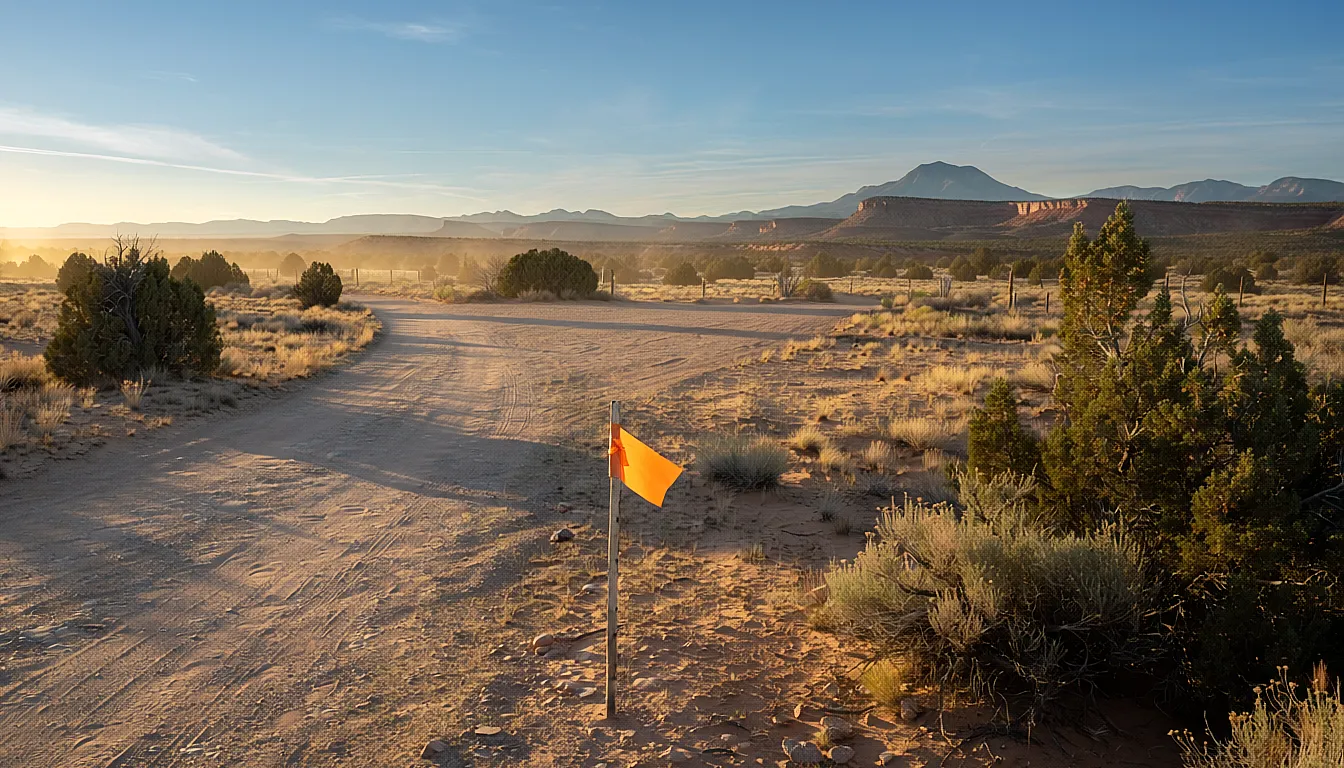
Explore Arizona Land Off-Grid
Looking for Available Acreage in Arizona?
Browse our current selection of off-grid land parcels or get in touch with our team directly to discuss what you're looking for.
Buying Off-Grid Vacant Land in Northern Arizona: 7 Rules Most Buyers Don't Know
Mark bought 40 acres outside Ash Fork without ever setting foot on it. The listing photos looked incredible, juniper trees, a mountain view, total silence. What the photos did not show was that his land had zero legal road access. To get to his own property, he had to cross a neighbor's fenced lot, and that neighbor wasn't interested in being neighborly.
Stories like this pop up more often than anyone in the land business would like to admit. Off grid property arizona sounds simple on the surface. Buy some dirt, skip the utility bills, live free. But there's a gap between what these listings promise and what buyers actually deal with once the deed is in their hands, and that gap catches a lot of people off guard.
1. Road Access Is Not Guaranteed, Even If It Looks Fine on a Map
A dirt road showing up on Google Maps does not mean it's a legal easement. Some of these roads cross private property without any recorded right of way. Others are BLM roads that may have a recorded easement in place.
Before closing on the property, you will receive the title report during your due diligence period. Then look specifically for recorded easements. Coconino County and Yavapai County both have GIS mapping tools online where you can check parcel boundaries against actual roads. It takes maybe twenty minutes and it can save you years of headaches.
2. Water Rights Work Differently Here Than You'd Expect
Arizona water law is its own beast. Just because your parcel sits in a valley with a wash running through it does not mean you have rights to that water, and it definitely does not mean there's groundwater accessible at a reasonable depth.
Some areas of northern Arizona require well permits through the Arizona Department of Water Resources, and in Active Management Areas, drilling a new well can be restricted entirely. Before you commit, ask the seller or agent for any existing well logs from nearby parcels. Neighbors who have already drilled will usually tell you how deep they had to go and what it cost.
3. Zoning Sounds Boring Until It Ruins Your Plans
Rural does not always mean unrestricted. Some parcels of vacant land arizona fall under county zoning that limits what you can build, how many structures you can have, or whether a mobile home is even allowed.
Check the zoning classification directly with the county planning department. A five-minute phone call beats finding out after the fact that your dream cabin plan violates a setback rule you never heard of.
4. Off-Grid Does Mean No Rules
People hear off-grid and assume it means no permits, no inspections, total freedom. Not quite true. Most counties still require permits for septic systems, and some require permits for solar installations tied to certain structures too. Some ranches may have no HOA or have a POA for road maintenance. Different by-laws may apply for different ranches.
Yavapai County, for example, has specific guidelines for alternative wastewater systems since traditional septic is not always feasible on rocky terrain. Composting toilets and greywater systems are allowed in many areas but usually still need approval.
5. Terrain Photos Lie More Than You'd Think
A flat-looking listing photo can hide a parcel that's actually sitting on a 20 percent grade, covered in volcanic rock, or split by a deep wash that floods every monsoon season.
Two things solve this almost every time:
- Topographic Survey: Request a topographic survey or check USGS topo maps for the exact parcel coordinates before making an offer.
- In-Person Visits: Visit the land in person during at least one rainy period if possible, since flash flooding patterns only show up when water's actually moving.
Skipping the in-person visit is the single biggest regret I hear from buyers. Photos flatten everything. Standing on the actual dirt tells you things a listing never will.
6. Distance to Services Changes Everything About Daily Life
Forty miles does not sound far on paper. On a washboard dirt road in a truck that's fighting for traction, it's an hour each way. Grocery runs, propane refills, medical emergencies, all of it gets harder the further you sit from a paved highway.
Before buying, map out realistic drive times to the nearest town with a grocery store, hospital, and hardware store. Google Maps drive times are usually calculated for paved roads, so add extra time for any unpaved stretch.
7. How You Buy the Land Matters as Much as What You Buy
How to buy off grid land in Arizona the smart way usually comes down to due diligence before the wire transfer, not after.
Title insurance matters even on raw land. It protects against boundary disputes, unpaid liens, or inheritance claims nobody mentioned. A land survey confirming actual boundaries versus what's on paper is worth the few hundred dollars it costs.
And always, always get a copy of the recorded deed and parcel number directly from the county assessor's site before finalizing anything. Some sellers, especially in owner-financed deals, aren't always upfront about existing liens.
According to Arizona State Land Department data, thousands of acres of state trust land get auctioned off yearly across Coconino, Yavapai, and Mohave counties, and pricing swings wildly based on access and utility proximity. A parcel with legal road access and proximity to a maintained highway can sell for triple the price of an identical-sized parcel a few miles deeper into rougher terrain.
That price gap tells you everything about what actually matters here. It's rarely the acreage. It's the access, the water situation, and the legal paperwork behind it.
Conclusion
Buying raw land in northern Arizona rewards patience and punishes shortcuts. Road access, water rights, zoning, and terrain all deserve real research before any offer goes in. The land itself rarely disappoints. It's the paperwork and planning around it that decides whether the dream turns into a headache or a home. Realtors are your best friend and there to help you through the entire process.
AZ Land Off Grid works with buyers through exactly these questions every day, helping match real research with real land so nobody ends up standing on parcels unreachable. Explore our thoroughly researched listings on azlandoffgrid.com today.
FAQs
Is off-grid land in Arizona a good investment?
It can be, especially in growing counties like Coconino, Mohave, and Yavapai where demand for rural and off grid property keeps climbing. Value depends heavily on access, water availability, and zoning flexibility, so research before buying matters more than the sticker price. Lets face it, they are not making anymore of it. Can only be a good investment.
Do I need a permit to live off grid in Arizona?
In most cases, counties still require septic or wastewater permits, and building permits apply if you're constructing a permanent structure. Otherwise, no permits needed just to use your property as camping, hunting, or recreational.
How much does an acre of vacant land cost in northern Arizona?
Prices vary widely, often somewhere between a few hundred dollars and several thousand dollars per acre depending on access, elevation, and distance to paved roads. Remote parcels with no road access sell far cheaper than those near a highway.
Can I get a well permit anywhere in Arizona?
Some regions fall under Active Management Areas with restricted groundwater use. Always check with the Arizona Department of Water Resources for the specific parcel before assuming a well is possible.