Is Northern Arizona the Best Region for Off-Grid Homesteading in 2026? A Market Perspective
Explore Arizona Land Off-Grid
Looking for Available Acreage in Arizona?
Browse our current selection of off-grid land parcels or get in touch with our team directly to discuss what you're looking for.
Northern Arizona keeps landing on serious buyers' shortlists this year, and the fundamentals back it up. Rising demand for off-grid living combined with a shrinking supply of affordable rural acreage nationwide has made this region one of the more actively traded markets for self-sufficient land ownership. We field the same question from buyers across the country: does the region actually hold up to the reputation, or is this just marketing?
Here's an honest market breakdown.
What Sets This Market Apart
Northern Arizona sits at a genuinely useful climate intersection — a factor that shows up directly in resale demand and buyer retention. Elevation here is high enough to avoid the desert heat most people associate with the state. Winters run milder than the Rockies; summers stay far more livable than Phoenix. That climate balance is a meaningful differentiator when you're comparing this market to other low-cost rural regions.
Terrain and Usable Land
Coconino and Yavapai counties combine high-desert plateau with pinon-juniper forest, which gives most parcels more than one usable zone:
- Open, flat acreage suited to solar arrays and cultivated ground
- Wooded sections offering natural windbreaks and a firewood supply
- Rolling terrain that handles drainage — a detail that matters more than most buyers anticipate until they're standing on saturated ground after a monsoon storm
It's common to find all three of these land types on a single 40-acre parcel, which is a genuine point of differentiation versus flatter, single-use rural markets elsewhere.
The Ownership Cost Case for Northern Arizona
The draw here isn't just scenery — it's the carrying-cost math. Property taxes on raw rural acreage in this region are notably low, often a few hundred dollars annually for a full 40-acre parcel. Compared to holding costs in more heavily regulated states, that's a meaningful spread over a multi-year hold.
Entitlements matter just as much. County zoning here tends to permit alternative structures, composting systems, and off-grid power installations that stricter jurisdictions restrict or prohibit outright. For a buyer underwriting a life without a monthly utility bill, that regulatory flexibility isn't a footnote — it's central to the investment thesis.
Utilities: What to Budget For
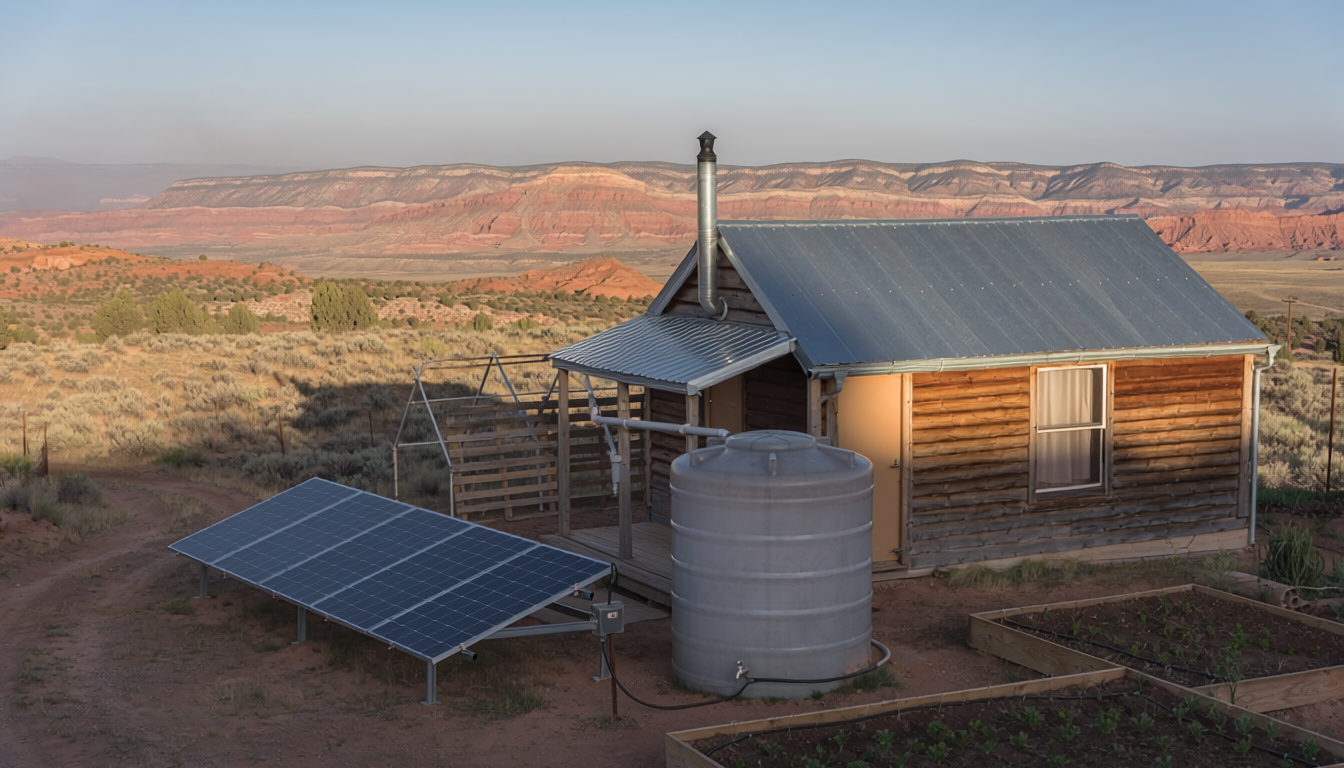
Water. Access typically means hauling from a nearby town at a modest per-gallon cost, or drilling a well where the water table allows it. Because the table sits deep in many areas, budgeting for hauling as your baseline plan — rather than assuming a well — is the more conservative underwriting approach.
Power. Solar paired with battery storage and a propane generator covers most parcels' needs. Connectivity has also improved the calculus meaningfully: satellite internet service now reaches areas that were previously considered off the grid in every sense.
Due Diligence: What Buyers Should Verify
Anyone evaluating off-grid parcels here should walk in with realistic expectations rather than a postcard image. Road access varies significantly parcel to parcel — some sit minutes from a maintained gravel road, others require a higher-clearance vehicle and patience. This is where local market knowledge translates directly into avoided cost:
- Verify legal, recorded road access before making an offer. A parcel without a recorded easement can become a title and access liability, regardless of how the land looks.
- Confirm zoning treatment for alternative builds. Cabins, yurts, and manufactured homes are entitled differently county to county.
- Underwrite water logistics first, not last. It constrains garden size, livestock plans, and daily operating cost more than any other single factor.
- Confirm solar exposure at the actual building site — not just the general parcel area.
- Locate survey pins and easements before closing to avoid boundary disputes once construction starts.
Skipping any of these steps in due diligence tends to cost more in time and money than doing them properly before you're under contract.
Lifestyle Factors That Affect Long-Term Satisfaction
Beyond the numbers, there's a livability dimension that keeps drawing buyers north. Deer, elk, and antelope move freely through the region, particularly near state trust land bordering many private parcels — a genuine amenity for hunters and homesteaders alike. Dark, light-pollution-free skies are a less quantifiable but frequently cited factor in buyer satisfaction.
Ash Fork, Seligman, and Williams sit close enough for supply runs without turning ownership into a commute-dependent lifestyle. That balance — privacy paired with reasonable access to town — is harder to find in comparable rural markets than most buyers expect.
How Northern Arizona Compares to Other Rural Markets
Other regions, particularly parts of the Southeast and Midwest, compete on price per acre alone. Few combine low property taxes, a workable four-season climate, flexible zoning, and genuine natural amenity value the way Northern Arizona does. For most buyers we work with, the deciding factor isn't price per acre in isolation — it's what that price actually entitles them to build and live.
Soil and Growing Potential
Soil quality varies more across this region than most buyers expect. Some parcels carry a reddish, mineral-rich base that supports vegetables and native plantings well once amended. Others run rockier and are better suited to raised beds than in-ground rows. A basic soil test before finalizing a garden or homestead layout is a low-cost, high-value diligence step. Drainage is equally important — late-summer monsoon rain can pool quickly on flatter ground, though raised beds and light grading typically resolve this at minimal added cost.
Seasonal Planning
This region runs on four distinct seasons, which surprises buyers who associate Arizona purely with heat. Spring brings mild temperatures and occasional wind. Summer stays warm but rarely severe at this elevation, especially relative to valley markets to the south. Fall arrives early, with cooler nights settling in by September. Winter can bring meaningful snowfall depending on elevation, which should factor into your planning for heating fuel and seasonal road access. Buyers who underwrite this seasonal variation up front tend to have a smoother first year of ownership than those caught off guard by an early storm.
Appreciation and Long-Term Value
Raw land in this market has held its value consistently, with demand climbing as more buyers look for space outside crowded metro areas. Limited inventory along maintained-road corridors has kept pricing relatively stable rather than volatile — a meaningful consideration for buyers weighing this against more speculative or overbuilt rural markets.
Carrying costs remain low year over year, which means buyers who aren't ready to build immediately can hold a parcel without significant financial strain. That patience has historically paid off, as well-located acreage near state trust land tends to become scarcer as more of the surrounding inventory sells.
The Bottom Line
Northern Arizona isn't the right fit for every buyer. Water logistics require real planning, and remote roads demand patience. But for buyers prioritizing low carrying costs, regulatory flexibility, and a landscape genuinely suited to self-sufficient living, this market holds up under scrutiny better than most comparable regions.
At AZ Land Off Grid, we walk buyers through exactly these questions — access, water planning, zoning, and financing — so the purchase decision is informed rather than rushed. If Northern Arizona has been on your radar, this is a reasonable market to take a closer look at.
Browse current listings at azlandoffgrid.com, or reach out directly to talk through a specific parcel.
Frequently Asked Questions
- Is off-grid living legal in Northern Arizona counties? Yes. Most rural parcels in Coconino and Yavapai counties permit off-grid setups — solar power, water hauling, alternative septic — though specific entitlements vary by zoning district.
- How much does land typically cost per acre in this market? Pricing varies by location and access, but rural acreage in this region generally runs from roughly $1,000 to over $10,000 per acre depending on improvements and proximity to maintained roads.
- Can I finance an off-grid purchase without a traditional bank loan? Many sellers in this market, including AZ Land Off Grid, offer owner-financed terms with flexible qualifying criteria, making ownership accessible to buyers who prefer not to go through a conventional mortgage lender.
- What should I confirm before buying land for off-grid use? Legal road access, zoning allowances for your planned structure, water availability, and solar exposure. These four factors most often determine how smoothly the build proceeds after closing.