
Living in an RV or Tiny Home on Raw Land in Coconino County: What’s Actually Allowed
Living in an RV or Tiny Home on Raw Land in Coconino County: What’s Actually Allowed
Owning a quiet stretch of high desert feels like a finished plan. It is only the first step. Many buyers of off-grid land in Arizona expect to park a trailer on the lot right after closing. Coconino County sees it differently. We reviewed the county’s own published guidance to show where the lines sit.
Why Zoning Comes Before the Purchase
Vacant acreage has no house, no utilities and often no paved road. The county decides what can happen on it. Those rules differ by parcel, and they cost far less to learn before closing than after.
Ask these questions first:
- Which zoning district covers the parcel?
- Does a dwelling already stand on it?
- What permit does a short or long stay need?
- Who maintains the road to the gate?
RV Living on Vacant Land
Tents Are Not an Option
Coconino County land for sale prohibits tent camping on private land outside permitted campgrounds. Owning the acreage does not change that.
The Temporary RV Permit
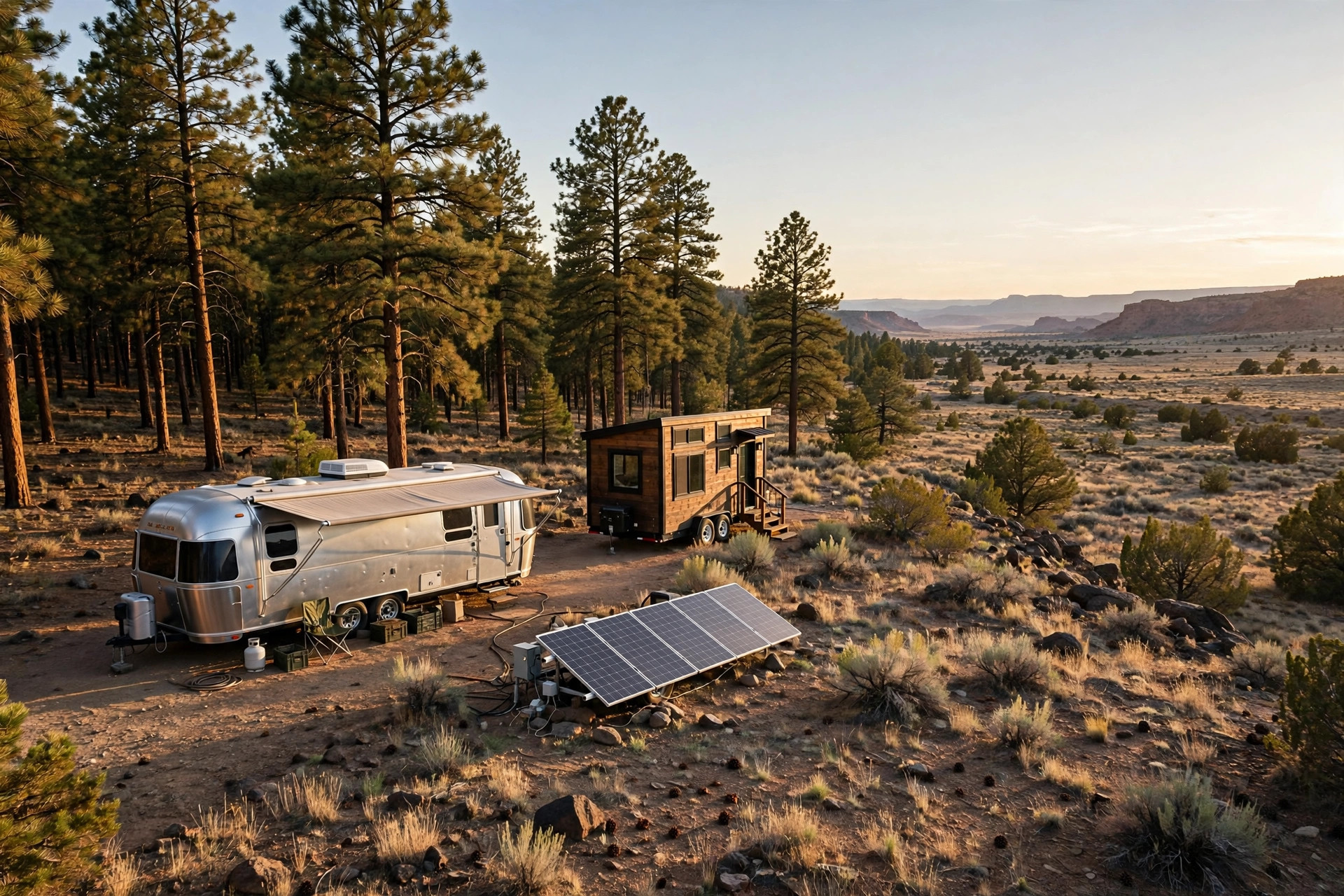
An RV can be used for a limited time with an approved Zoning Permit, as long as no residence already stands on the property. The county allows up to 120 consecutive days per calendar year. Its stated goal is to keep private lots from working like campgrounds in residential areas.
Longer Stays
The county’s RV permit sheet lists three types: 120-day, 180-day and permanent. The 180-day type is tied to an active building permit. That suits owners who are constructing a home and need a place to stay.
Living in an RV as a permanent residence falls under Section 3.17 of the Zoning Ordinance. Applicants should expect to submit a written narrative and site details such as fencing, lighting, parking and landscaping. Building, environmental and engineering permits may also apply.
Quick tips for RV owners:
- Apply before the RV arrives, not after.
- Track your days, since the limit counts consecutive ones.
- Keep a copy of the approved permit on site.
- Match the permit type to your building timeline.
Tiny Homes: Wheels or Foundation
Tiny Homes on Wheels
Counties often classify a tiny home on wheels as an RV. If Coconino does the same for yours, the RV rules above apply. Ask a county planner to confirm the classification before you buy one.
Tiny Homes on a Foundation
A foundation-built tiny home is treated as a dwelling. The county’s housing matrix points to Appendix Q of the 2018 International Residential Code. It also lists local design criteria, including snow and wind loads. A building permit is part of the process. Homes built outside the county appear to face the same standards.
Rules That Catch New Owners Off Guard
- An RV does not count as an accessory dwelling unit. If a main home stands on the land, the RV cannot be rented out. Living in the RV while renting the house is also barred.
- A driveway that joins a county-maintained road needs its own permit.
- Some ranch areas have road associations with yearly dues. One Northern Arizona ranch area near Seligman charges $285 a year.
A Staged Path From RV to Permanent Home
Many owners treat the RV as a bridge, not a final address. A sensible sequence looks like this:
- 1. Buy a parcel with no existing home and confirm its zoning.
- 2. Apply for the temporary RV permit and spend time surveying the land.
- 3. Submit plans for a house or foundation tiny home and secure the building permit.
- 4. Move to the 180-day RV permit while construction runs.
- 5. Finish the build and close out inspections.
This order follows the county’s own permit logic. Each stay stays lawful from the first night to the last.
Mistakes Worth Avoiding
- Assuming rural land means few rules.
- Relying on a verbal answer instead of a written one.
- Copying what a neighbor does without checking their permit.
- Overlooking association dues and road obligations.
- Buying a parcel that already has a house when you planned a temporary RV stay.
Steps to Take Before You Buy
- 1. Find the parcel’s APN, the number the county uses to track it.
- 2. Look up the zoning on the county’s online map.
- 3. Call Planning and Zoning at 928-679-8850 and describe your plan.
- 4. Confirm legal access and whether the road is maintained.
- 5. Save every answer in writing.
County rules change over time. This article is general information, not legal advice, and a county planner has the final word.
Finding Coconino County Land for Sale That Fits Your Plan
Search with your housing plan in mind, not only the price. A parcel that suits a hunting camp may not suit a family home.
Useful filters when browsing Coconino County land for sale:
- Maintained road access for reliable year-round access.
- Parcels with no existing home, if you want the temporary RV route.
- Nearby water haul points. Hauling runs about one cent a gallon around Ash Fork and Seligman.
- Enough rural acreage for solar panels and a septic layout.
Sound off grid property Arizona choices pair legal use with practical access. A low price means little if the permit path is closed.
Conclusion
Short RV stays are possible with a permit. Longer ones need more approvals. Tiny homes follow either the RV rules or the dwelling rules, depending on how they are built.
At AZ Land Off Grid, we help buyers match remote acreage near Ash Fork, Seligman and Williams with realistic plans. We can point you to the right questions before you commit. Call 623-734-4588 to start the conversation.
FAQs
Can I live in an RV full time on vacant land in Coconino County?
Only under the right permit. The temporary option covers a limited number of days each year. Full-time living falls under the permanent residence rules in Section 3.17, which require added approvals.
How does the county classify a tiny home on wheels?
Many jurisdictions treat it as an RV, which limits long-term living on standard lots. Confirm the classification with the county before purchase.
What should I confirm before buying off grid property Arizona for RV use?
Request the APN, zoning designation, recorded easements and written permit guidance. Check that no existing residence is on the parcel if you rely on a temporary permit.
Do septic, water and power setups need approval?
Often, yes. The county notes that building, environmental and engineering permits may apply. Ask Planning and Zoning which ones your parcel needs before you install anything.