
Septic Systems for Off-Grid Land in Northern Arizona: Permits, Costs, and Alternatives
Septic Systems for Off-Grid Land in Northern Arizona: Permits, Costs, and Alternatives
Most buyers plan for solar panels and a water tank first. Wastewater usually comes up later, and it can change a budget fast. Anyone browsing off grid land for sale in Arizona should treat the septic question as part of the purchase, not a task for after closing. Here is what we have learned about permits, costs and the options that suit high desert terrain.
Why Septic Planning Comes First on Remote Parcels
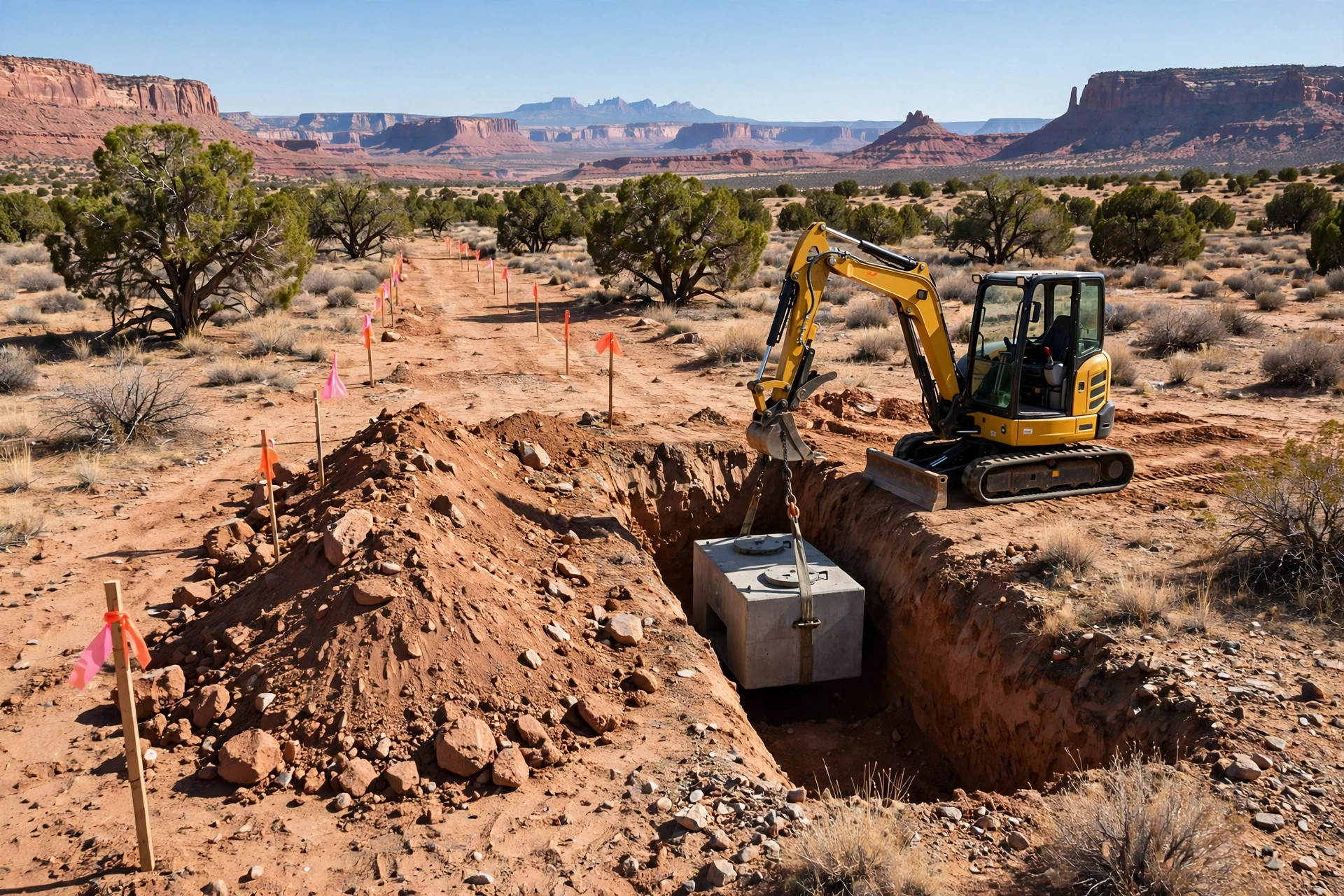
Northern Arizona ground can be stubborn. Many parcels sit on rocky soil, shallow bedrock or tight clay. A septic field needs water to drain through the soil, and these layers do not always allow it.
The soil under your feet matters as much as the view. A flat, handsome lot may need a very different system from the one next door.
The good news is that most rural parcels in Coconino and Yavapai counties can be served by some approved system. The key is knowing which kind before your sign.
How Permits Work in Northern Arizona
Who Issues the Permit
The Arizona Department of Environmental Quality (ADEQ) sets the state rules. Counties handle most applications. Coconino and Yavapai each run their own review through their environmental health offices.
Forms, fees and timelines differ between them. Call the office that covers your parcel before anything else.
What the Site Evaluation Covers
A permit cannot be issued until someone studies the lot. The evaluation usually checks:
- Soil type and how quickly it absorbs water
- Depth to bedrock or hard layers
- Slope and natural drainage paths
- Distance to washes, wells and property lines
- Bedroom count or expected daily water use
The results decide the system type. Shallow rock often points toward an engineered design.
Tips for Smoother Approval
- Collect the parcel number (APN) and ask the county for any septic records on file.
- Hire an evaluator or designer who works in your county regularly.
- Mark your planned building spot before the evaluation. Moving it later can trigger a second review.
- Ask about turnaround times, since busy seasons slow things down.
- Keep every approval and inspection record. A future buyer will ask for them.
Installation also needs an inspection before anything is buried. Skipping that step creates trouble later.
What a Septic System Costs
Prices swing with soil, distance and contractor availability. Remote roads add delivery charges as well. The figures below are common planning ranges, not quotes, so request written estimates for your own lot.
Typical Cost Ranges
- Site evaluation and soil work: about $500 to $2,000
- County permit and inspection fees: often a few hundred dollars
- Conventional tank and drain field: roughly $8,000 to $20,000 installed
- Engineered or aerobic system: roughly $20,000 to $40,000 or more
- Composting toilet unit: about $1,000 to $3,000, plus a graywater setup
What Pushes the Price Up
- Rock excavation or blasting
- Long haul distances for equipment and materials
- Larger homes with more bedrooms
- Pumps or aerobic units that need steady electric power
That last point matters on a property without grid service. A treatment unit that needs electricity also needs a solar system sized to carry it.
Ways to Keep Costs Reasonable
- Place the home on the best soil, even if the view gives up a little.
- Size the house to fit the system, not the reverse.
- Gather two or three written quotes.
- Schedule work in drier months when crews can reach the lot.
Alternatives When a Conventional System Does Not Fit
A standard tank and drain field is not the only route. When soil or budget rules it out, three options deserve a look.
Engineered and Aerobic Systems
These add a treatment step, often with an air pump, to clean wastewater before it reaches the soil. They suit tight lots and poor ground. The tradeoff is a higher price, a need for dependable power and regular servicing.
Composting and Incinerating Toilets
These handle toilet waste without water, which cuts wastewater sharply. Counties may still require approval, and the remaining household water needs a safe destination. They fit seasonal cabins and weekend camps particularly well.
Graywater Reuse
Water from sinks, showers and laundry can often irrigate trees or landscaping. Arizona off grid living has a graywater rule for small residential systems, generally those under 400 gallons a day. Owners who follow the listed practices can skip a separate permit. Toilet water is excluded, and counties may apply the rule in their own way, so confirm locally.
Questions to Ask Before You Buy
Buyers of vacant land Arizona hold the most leverage during due diligence. A short checklist makes that period count:
- 1. Has the county ever approved a septic system on this parcel?
- 2. Is a soil evaluation already on file, or can one be done before closing?
- 3. Can installation equipment and pump trucks reach the site on the existing road?
- 4. Could the planned solar setup support an aerobic unit if one is required?
- 5. Does the contract allow time to complete an evaluation?
A seller who answers these openly is usually one worth trusting.
Conclusion
Septic planning is not the most exciting part of owning land. It does protect everything else you build. A clear permit, an honest cost estimate and a system matched to your soil keep Arizona off-grid living comfortable for years.
At AZ Land Off Grid, we help buyers look into access, zoning and utility needs before closing, so the land fits the life they have planned. When you are ready, browse our current listings or call our team to talk through a specific parcel.
Frequently Asked Questions
Do I need a septic permit before building on vacant land in Arizona?
Yes, in most cases. A home or cabin with plumbing generally needs an approved wastewater system. Applications are usually handled by the county where the parcel sits, under ADEQ rules.
How much should I budget for a septic system on remote acreage?
Many owners plan between $8,000 and $20,000 for a conventional system. Engineered systems can cost considerably more. Soil conditions and site access cause most of the difference, so written quotes are worth collecting.
Are composting toilets allowed in Northern Arizona?
They are often allowed, though approval depends on the county and the use of the property. Wastewater from sinks and showers still needs a lawful way to drain or be reused. Confirm requirements with the county health office first.
Can I check septic feasibility before buying a parcel?
Yes. Ask for any records on file with the county and request a soil evaluation during the due diligence period. This step shows which system types are realistic and what they may cost.