
Starlink and Off-Grid Internet in Northern Arizona: What Works on Remote Land
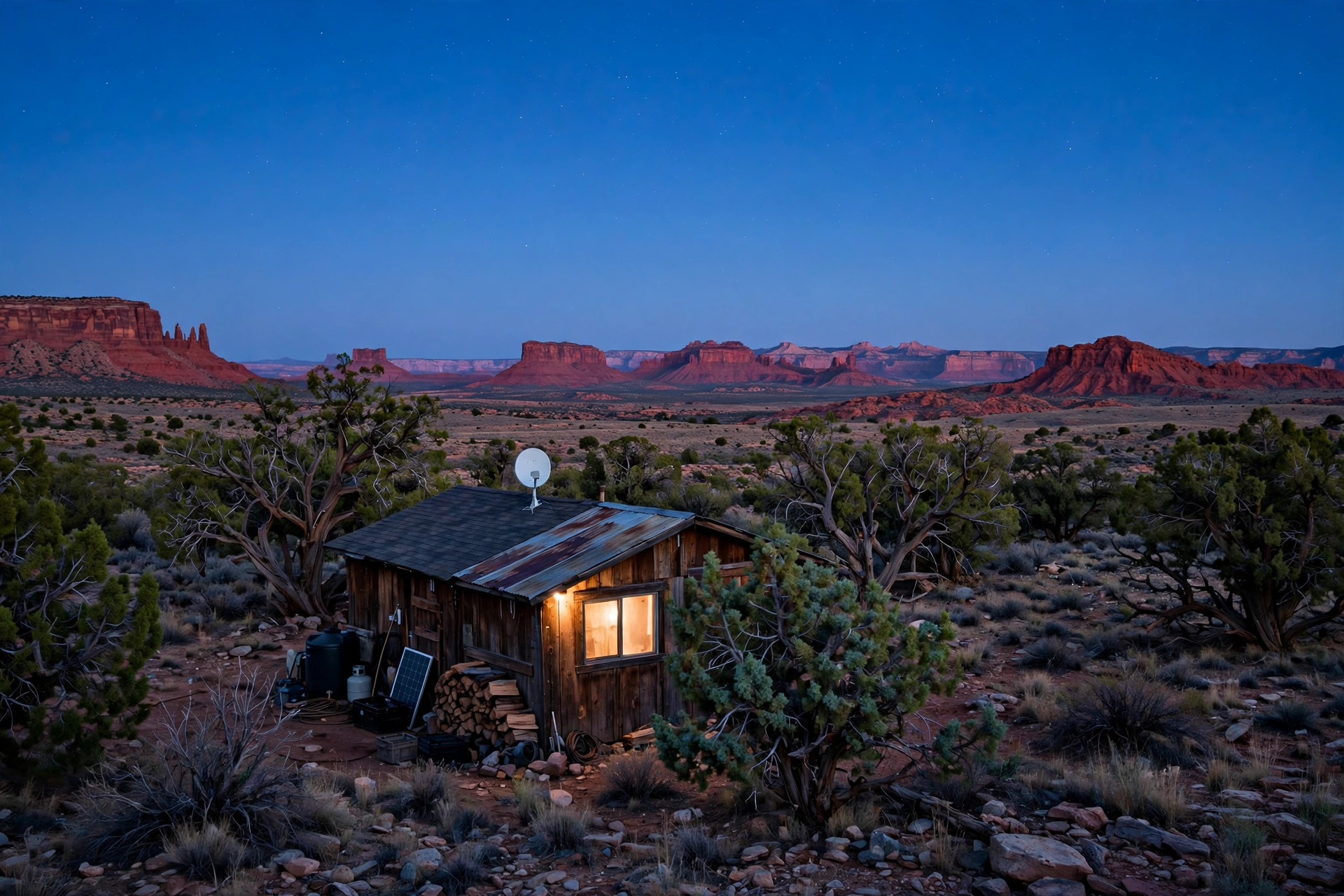
Starlink and Off-Grid Internet in Northern Arizona: What Works on Remote Land
A satellite dish zip-tied to a fence post. A laptop on a truck tailgate. A video call that holds steady while elk cross the ridge behind the cabin. Ten years ago, that scene sounded unlikely. Today it is a normal Tuesday for many owners of remote land Arizona buyers once considered too isolated for work or study.
A dish alone does not solve everything, though. Terrain, power, and tree cover all play a part. We wrote this blog to explain what works, what does not, and how to plan before closing on a parcel.
Why Internet Belongs on Your Buying Checklist
Most land searches begin with roads and water. Connectivity usually comes later, if at all. That order can cost buyers time and money.
A dependable connection shapes how you use the property:
- Remote work and online classes
- Weather alerts and emergency calls
- Camera and gate monitoring
- Remote checks on solar systems and water tanks
It also changes the feel of a place. A cabin with no signal can seem lonely after the first week. Buyers of off grid land Arizona parcels often find that steady internet turns a weekend camp into a home they can live in year-round.
How Starlink Fits Northern Arizona
Starlink uses satellites in low orbit. It needs no towers and no buried lines. That makes it a natural match for remote acreage beyond the reach of the highway corridors.
Equipment and Setup
The kit includes a dish, a router, and a power supply. Most owners finish setup in an afternoon, and the phone app guides placement. No technician visit is required.
A Clear View of the Sky
The dish needs an open view overhead. Pinon and Junipers stay fairly low across much of the high desert, so many building sites have good exposure. The app flags obstructions before you commit to a mounting spot (a small check that saves a lot of ladder work).
Power Draw on a Solar System
Power is the part many first-time owners overlook. A standard dish commonly draws somewhere around 50 to 75 watts, and smaller models use less. Left running all day, that adds up to well over one kilowatt-hour.
For an off grid property Arizona owners rely on solar, this matters. Plan battery capacity with the dish in mind. A sleep schedule in the app can cut overnight use when nobody is online.
Where Satellite Internet Struggles
No system is perfect, and honest planning includes the weak spots.
- Tree cover and canyon walls: Dense stands or steep terrain can interrupt the signal.
- Winter weather: Snow and ice can collect on the dish at higher elevations.
- Wind: Open ranch country gets strong gusts, so the mount must be solid.
- Variable speeds: Performance can shift with local demand and time of day.
- Ongoing cost: Equipment is one expense. The monthly plan is another, and prices change, so confirm current rates before you budget.
None of these are deal breakers. They are reasons to test first.
Backup Options Worth Considering
A second connection adds resilience, especially for people who work from the land.
Cellular with an External Antenna
Coverage tends to be stronger near Interstate 40 and the old Route 66 corridor. A roof-mounted antenna or signal booster can pull in a usable signal where a phone alone cannot. Test more than one carrier, because coverage differs from one hillside to the next.
Fixed Wireless
Some local providers beam service from a nearby tower. Availability is limited, so ask who serves the area before assuming it exists.
Satellite Messengers
These devices do not provide internet. They send short texts and location pings from anywhere, and they are valuable on back roads when a vehicle breaks down.
A Practical Planning Checklist for Off-Grid Buyers
Before you buy off-grid land Arizona listings suggest you walk through these steps in order:
- 1. Visit the parcel and check cell signal on at least two carriers.
- 2. Walk the likely building site and note trees, ridge lines, and rooftop height.
- 3. Estimate your solar and battery needs, including the dish.
- 4. Pick a mounting spot that is high, stable, and sheltered from the worst wind.
- 5. Ask neighbors or the listing agent what service has worked for them.
- 6. Review association or county rules on poles, masts, and outbuildings.
Each step takes little time. Together they prevent most of the surprises new owners report.
Quick Tips for Reliable Service
Keep these points handy once the dish is installed:
- Protect the gear: A surge protector guards against lightning and generator spikes.
- Use a wired link for work: An Ethernet cable to your main computer often beats wireless inside a metal-roofed cabin.
- Keep spare cables: Dust, sun, and wildlife are hard on exposed wiring.
- Review usage monthly: Habits change, and so does your power budget.
What This Means for Your Land Search
Strong internet is now possible on many parcels that once seemed out of reach. Success depends on a clear sky view, enough solar capacity, and a backup plan. Buyers who test these points early tend to settle in faster and spend less on corrections.
Location still matters, of course. A parcel on an open plateau and a parcel tucked inside a deep canyon will behave very differently. Both can be wonderful places to live. They simply call for different equipment and expectations.
Conclusion
Remote living no longer means being cut off. With the right dish placement, a well-sized solar setup, and a sensible backup, reliable service is achievable across much of Northern Arizona.
At Arizona land off-grid, we help buyers explore acreage near Ash Fork, Seligman, and Williams, and we share what we know about access, utilities, and daily life on the land. If you are comparing parcels and want to understand the connectivity picture for each one, reach out to our team. We will gladly help you plan a showing and ask the right questions on site.
FAQs
Does Starlink work on remote land in Arizona?
Yes, in most places with a clear view of the sky. Hills, dense trees, and canyon walls can interfere. Testing the exact building site is the most reliable way to know.
How much solar power does an off-grid internet setup need?
It depends on the dish model and how many hours it runs. A standard dish can use over one kilowatt-hour per day if left on constantly. Many owners add battery capacity and use a sleep schedule to reduce the load.
Is cell service enough for an off grid property in Arizona?
Sometimes, particularly near major highways. Signal drops quickly in canyons and on the far side of ridges. A booster and external antenna help, and many owners keep satellite as the primary connection.
Do I need a permit to install a satellite dish on my land?
Requirements vary by county and by any ranch or road association. A small dish on a pole is often straightforward. Taller masts or new structures may need approval, so confirm the rules before you build.